


This month, we’re launching a self-service version of Eponymos, software with AI-assisted writing and publishing built for Comms teams and media professionals.
If you’re responsible for a brand, a person, or a cause, visit eponymos.com. The spelling is intentional. The missing “u” is you.
Thirty days free. No credit card. No gimmicks. No tricks. (Did I mention free?)
I know something about what will happen next, and so do you.
Some comms and PR pros reading this will click the link. And others won’t try it. Not because of the price or because they’ve determined it doesn’t work. They’ll wait until a competitor uses it, or one of the cool kids online discovers it, or they read about it in the news.
You and I have watched this behavior in every industry all our working lives.
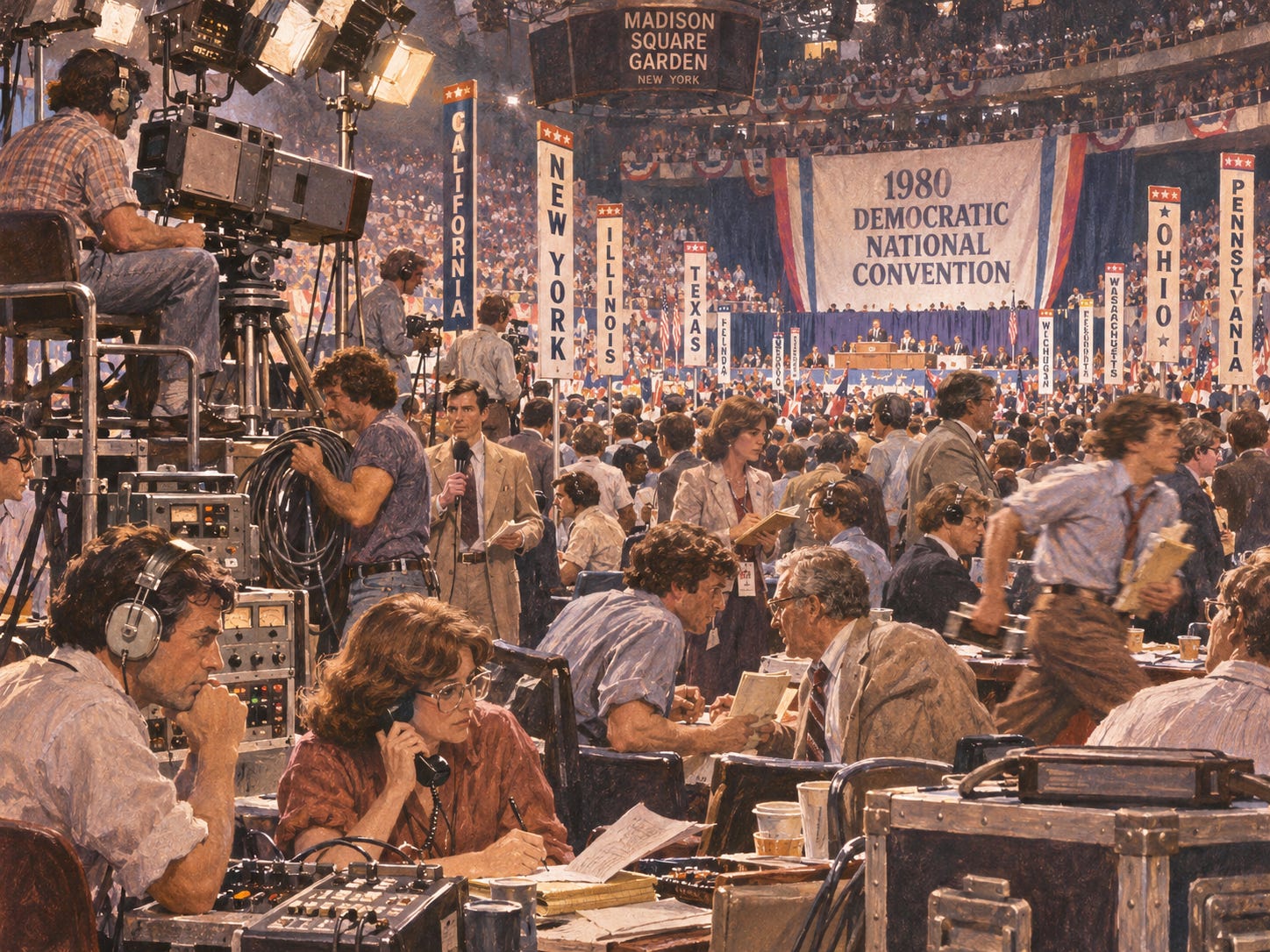
In 1980, I was working logistics for CBS News at the Democratic National Convention in Madison Square Garden. Twenty-hour days for a week. And after the breakdown on the last night, a CBS-only party at Tavern on the Green in Central Park where the tiny white lights wrapped on trees and branches gave way to dawn.
The operation itself felt like a festival, an oversized orchestra of reporters, producers, technicians, equipment, and lots of movement. Jack Smith and the CBS leadership conducted it wonderfully. My contribution was rather modest.
We had a fleet of CBS-owned cars with “NYP” license plates (New York Press), driven by street-smart guys who could seemingly park anywhere. One car transported Walter Cronkite between the convention and his uptown home. I gave that CBS gray Ford Crown Vic the code name “Golden Anchor” as we gave out assignments over our two-way radio.
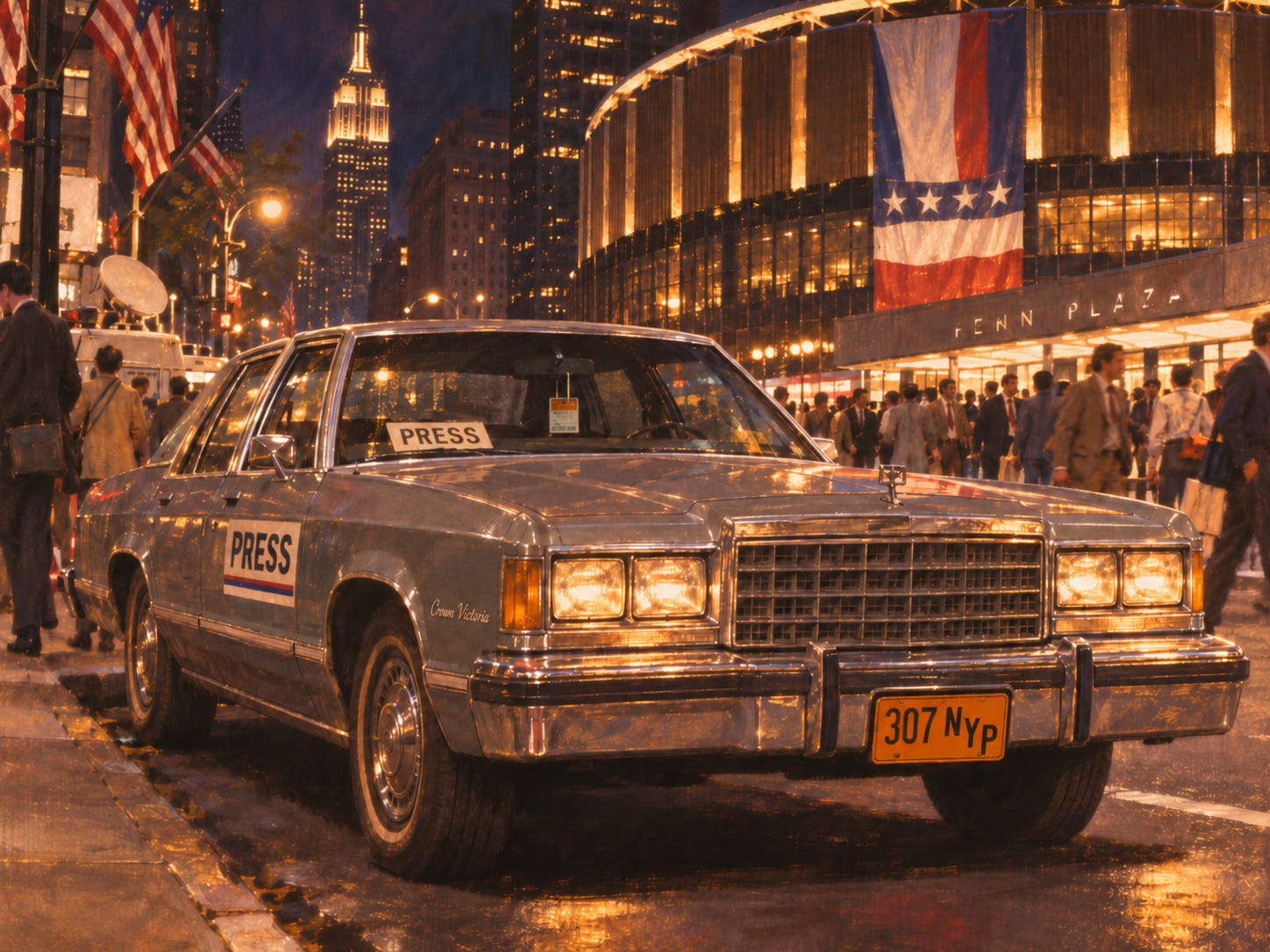
Everybody let me. Nobody corrected me. Jack Smith was amused, and the couriers driving Walter told me he was, too.
My reward after another twenty-hour day was a drink at the hotel bar across the street, four hours of sleep, then back to the Garden.
It was exhilarating to be part of something so big, and so well run. Crews were working their first convention film-free, now with ENG cameras, the lighter electronic equipment replacing film. Faster, easier, better for getting stories on television. By now, the changeover from film was widely accepted.
By the 1990s, I was back at CBS, running its flagship New York newsroom. We were chosen to be first major-market station to launch high-definition television, days after WRAL-TV in North Carolina. Two years later, we launched an all-virtual set, the first local-news virtual set in the United States.
HD pictures were sharper, more compelling. The virtual set, maybe not so much. The point is, we tried it.
My litmus test was simple then, and remains so: Does it help tell the story better?
In 2010, running another New York newsroom, I was fascinated by smartphones, broadband video and what we’d soon call streaming.
It was as clear to me as ABC and XYZ, both stations I’d helped run, that local television needed to cover more neighborhoods and more stories, and be on more screens than just TV screens in living rooms and bedrooms. Otherwise, Facebook and other platforms would increasingly own the relationship with local audiences.
I met an entrepreneur named Vernon Jones.
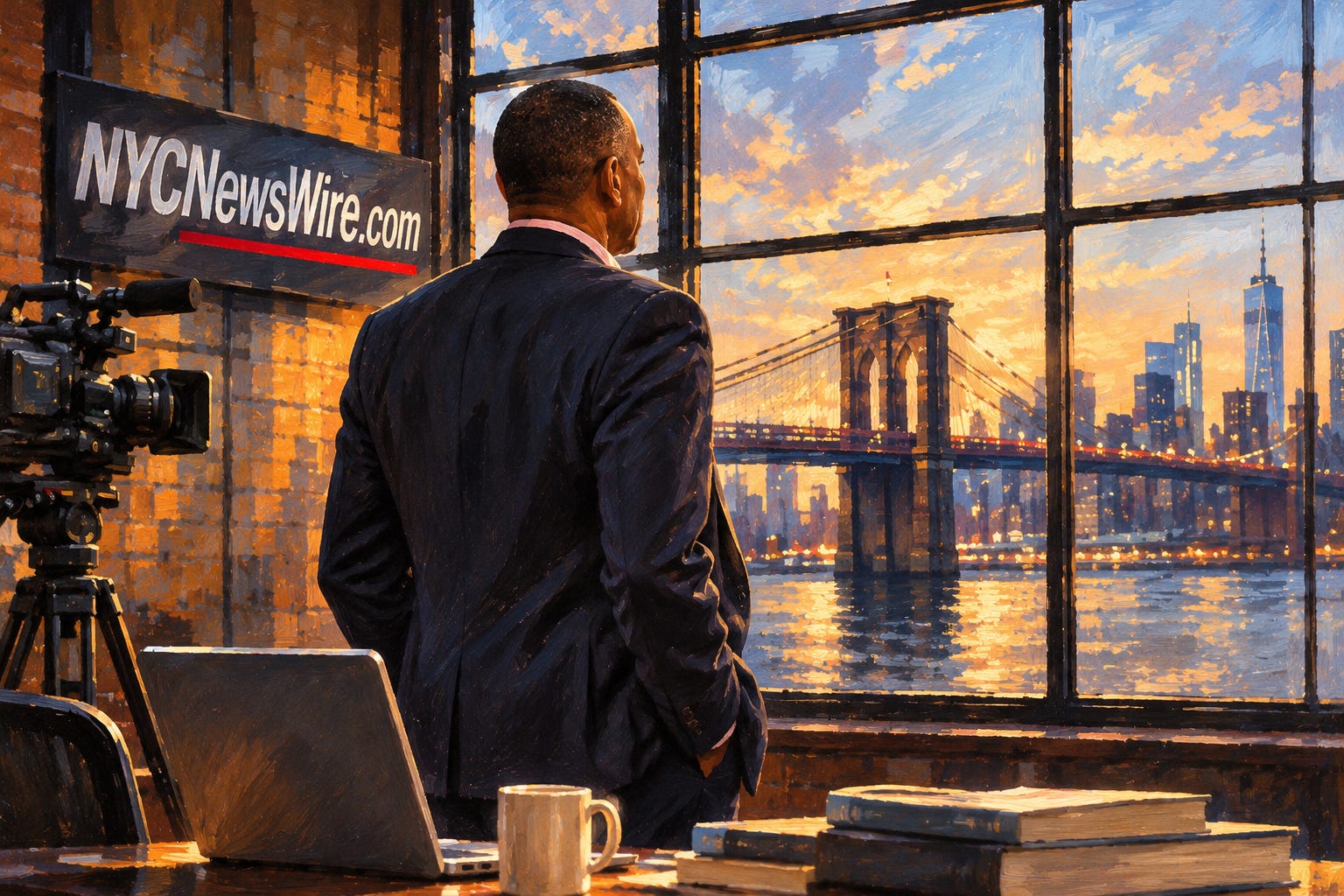
Vernon was building a high school sports business, organizing game coverage, gathering highlights and wanting to deliver them to television stations. It was a genius plan, and we instantly hit it off.
He had already secured the rights to cover New York City public high school sports without paying for them. He saw the value of something the school system had yet to fully appreciate.
Vernon was a thinker.
Today, he owns NYCNewsWire.com, and Eponymos is the platform that runs it. I’m proud to share that with you as COO of Eponymos.
NYCNewsWire represents one answer to how local news can be reported effectively. Vernon and his team are serving the city, concentrating on Brooklyn. They’re covering local community stories New York City’s newspapers and TV stations often overlook.
That’s very different from newspapers closing and television groups still cutting hundreds of jobs, without significantly better ways to serve neighborhoods. Ironically, more people are connected and consuming information than ever. Political campaigns seem similarly reluctant to innovate.
For the past three years, I’ve encountered professionals in both political parties wedded to the ways campaigns have operated for decades. Negative attack ads dominating television advertising, elaborate budgets, consultants consulting consultants, rigid assignments and rules about when and how money could be spent.
Billions devoted to winning elections, but remarkably little curiosity about another way to communicate.
The explanation I got was often, “Yeah, Eponymos looks good, but there’s too much at stake.”
Some campaign professionals behave as though they’re performing brain surgery with no time left on the clock. I appreciate that they take their responsibilities seriously. But the hubris can be remarkable.
Too much at stake to investigate something new? Fifteen minutes of your seven-day workweek?
But let’s go back to Brooklyn.
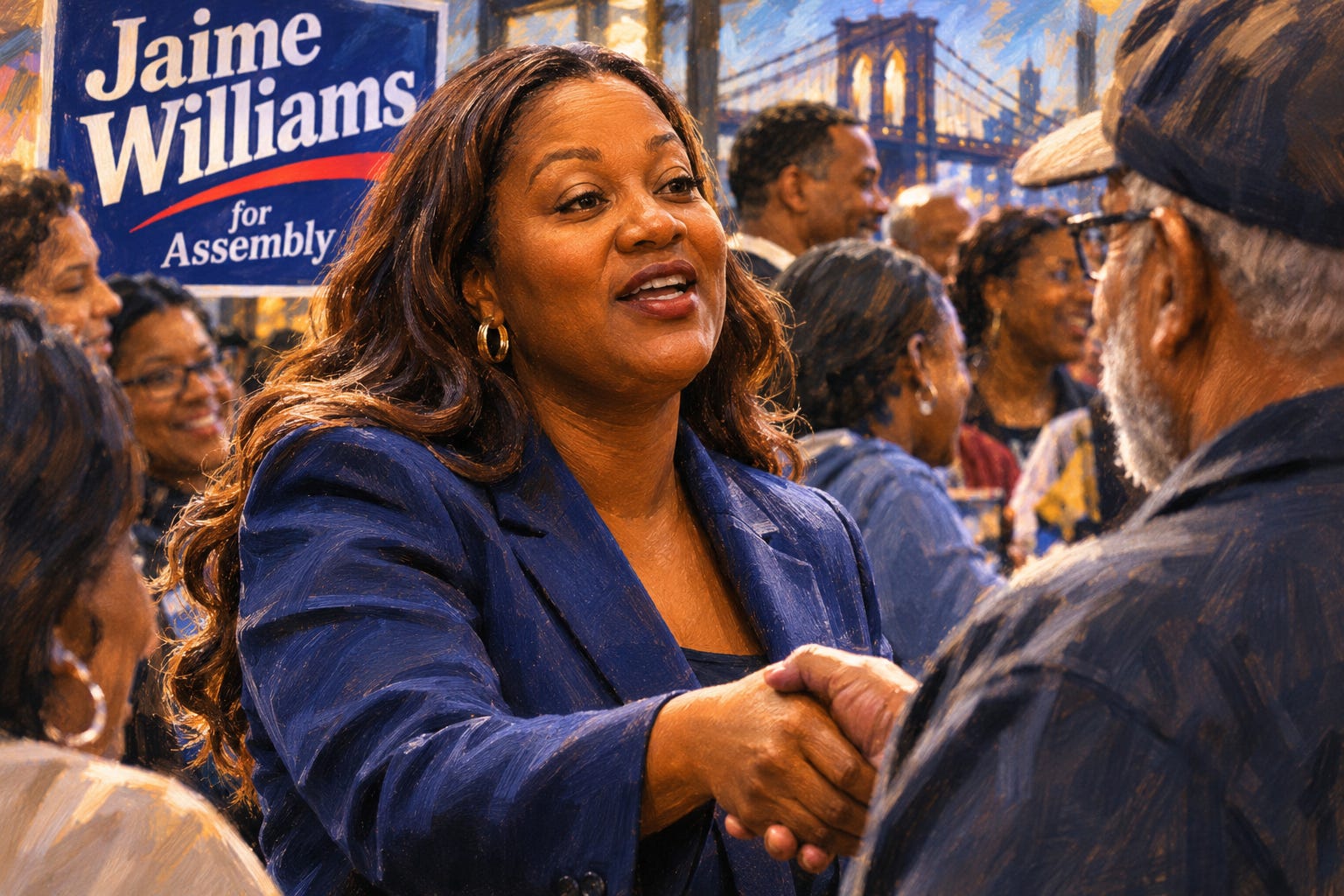
This June, Brooklyn Assemblywoman Jaime Williams was fighting to retain her seat in a difficult Democratic primary. She needed to respond quickly to political attacks.
She turned to Vernon. Using Eponymos through NYCNewsWire, Vernon helped get her response out faster than his previous methods allowed.
Then he called me.
“Hey, wait till you hear this! They went and attacked all the incumbents running for state assembly. Jaime Williams called me for help, and we put her story out in ten minutes with Eponymos, and that was enough to push back, and she was the only candidate that was able to. She doesn’t know anything about how we did it, but she says our help was the difference between her winning and losing!”
He was excited. He believed he’d helped Williams at a crucial moment, and told me she was grateful.
Williams won her primary and went on to be re-elected.
I thought about that young entrepreneur I’d met more than fifteen years earlier, trying to revolutionize high school sports coverage.
Still thinking. Still building. Still looking for better ways to get stories to people.
While others were explaining why there was too much at stake to experiment, Vernon was doing something about it.
He’d simply tried it.
