


The best way to read this particular column today is to do what I did writing it: get through the news quickly.
We won’t linger on the “Week in Review” even one phrase longer than necessary.
But it is the backdrop for today’s exploration of Management and Wisdom.
My head hurts, my heart aches, over the mind-numbing coverage on television and online about the Cornell rape investigation. And about the failed execution in Tennessee.
I’ll add a third, less gruesome story, but one I just can’t stop thinking about: a massive effort to modernize air traffic control systems being pushed forward without even an integrated schedule designed to minimize disruption to the air traffic controllers actually operating the system.
These are stories of human tragedy, stupidity, despair, utter sorrow and ignorance.
And then comes the coverage, especially on cable channels.
It is theatre masquerading as journalism.
Another segment.
Another panel.
Another collection of people who weren’t there, explaining what happened to people who weren’t there.

A two-year-old rape allegation at Cornell University is back in the headlines.
Justice has already been delayed. Now the story gets exploited and becomes a circus instead of the rigorous criminal investigation it should have been in the first place.
A woman said she was raped in 2024.
The criminal justice system had a job to do then.
It has that job to do now.
Then the story of a botched lethal injection in Tennessee. Botched!
The state of Tennessee administered its execution protocol and the killer survived, critically injured, after problems involving the intravenous lines and delivery of the drugs.

And then the third story: an enormous air traffic control modernization effort. The head of the air traffic controllers’ union has said the people operating and maintaining the system need a seat at the table. Why on earth wouldn’t that be built into the process from the start?
Now, let me tell you where we’re going with the rest of this column.
I’m not going to dish out management lessons or wisdom to the news industry I called home for my career. We will do that in future columns.
Buried underneath three completely different, awful events is a question managers should recognize immediately:
What was going on before everything went wrong?
Let me explain.
Early on as a manager, I decided that before anyone else was “in trouble,” I would review my own managers’ conduct and my own before casting judgments on our staff.
Some managers hated it at first.
Some never came around.
But before I could be critical of any staffer, I wanted to know what we had done — or had not done — as leaders.
Management. And Wisdom.
The head of the campus police. The head detective in town. The D.A.
Investigate a rape allegation fully. At the time she says it.
Not when she is forced to reassert it two years later.
Question the investigators, too.
It’s 2026. Haven’t we learned that rape victims’ allegations can be complicated, memories can differ, evidence can conflict and conclusions may take time?
Difficulty is not an excuse.
And difficulty is not an excuse in Tennessee either. If the state intends to execute someone by lethal injection, who signed off on the procedure?
Who contemplated the medical complications?
Who ran the process forward far enough to ask what happens if it doesn’t?
And if you are rebuilding the systems air traffic controllers rely upon every day, why wouldn’t reducing disruption to the people actually operating those systems be built into the plan from the beginning?
Three completely different stories.
One management question:
Then what?
What happens next if we don’t investigate thoroughly?
What happens next if the execution protocol fails?
What happens next if thousands of pieces of a new system aren’t coordinated around the people who have to operate it?
Good managers ask that question before the lawyers, reporters, consultants and investigators arrive to triage the damage.
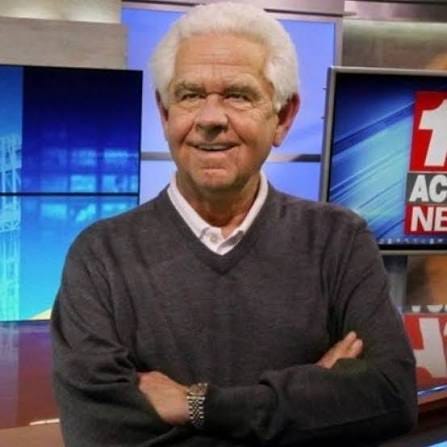
Bill Applegate, years later, in Cleveland
Years ago, I watched Bill Applegate make the same point much more efficiently.
Bill was a well-known leader in local television, one of my bosses who became a dear friend, especially after we worked together in New York and Chicago.
A manager once asked him, “How did you deal with this type of problem?”
Bill had a flair for emphasis when he wanted it.
He took a long drag on his cigarette, exhaled with a flourish into the air, waved his arm in a grand sweeping motion, then stared at the manager and said:
“I didn’t have that problem when I had your job.”
He stared just long enough to add a non-verbal exclamation point, then turned and left the room.
Standing there watching it unfold, I realized that manager was learning something I thought I knew instinctively.
I didn’t get into situations.
Not because every problem can be anticipated.
It can’t.
But a surprising number of them can.
Run a better startup. Run a better television station. Run a better newsroom.
Hire better.
Pay attention sooner.
Don’t tolerate something for six months and then act surprised when it becomes a crisis.
Watching Bill made me think about where what I considered “instinct” had actually been learned.
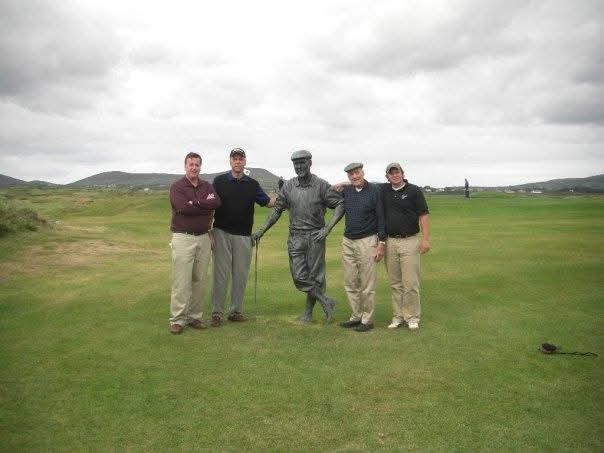
My brother Joe, me, Dad, and my son, Bill III. Waterville Golf Club, 2007
I was a kid.
My dad was a cop.
After my baseball games, some of the other dads would go to a bar for a beer.
One day, I asked my father why he didn’t go along with them.
He told me bars were places where people drank, and sometimes people fought.
Okay. But what did that have to do with him?
I’m a cop, he explained. If a fight starts, I’d have to stop it.
Okay, but...
He carried a gun, he reminded me. If things got out of hand, he might have to draw it.
Okay, but...
“If I draw it, I may have to use it. And if I use it, someone is going to get hurt.”
Then he paused, and his voice grew solemn.
“And it won’t be me.”
Another pause, then a punchline meant for the rest of my life.
“The best way for that not to happen is for me not to go in the first place.”
I didn’t fully understand it then.
More honestly, I didn’t want to.
It seemed austere, long before I could spell austere or use it in a sentence.
I also know my dad wasn’t just explaining why he wasn’t going to a bar.
He was teaching me.
Purposefully.
My father gave me a method.
Run the situation forward.
Then what?
And then what?
And then what?
Keep going until you reach the consequence you cannot accept.
Then work backward.
If you’re an investigator or prosecutor, take the rape allegation as seriously as if the woman were a member of your own family.
If you’re responsible for an execution protocol, build one in which failure is not treated as an acceptable possibility.
If you’re rebuilding systems people depend on every day, listen to the people doing the job.
Bring them into the process.
Give them a genuine sense of owning the changes that will come.
Benefit from their experience.
And before criticizing your staff, look first at the people managing them.
Including yourself.
That is where Management and Wisdom meet.