

News Item: Disney is encouraging employees to use AI to help prepare annual performance reviews and goals.
News Item: Disney is also cutting jobs, including in Human Resources.
Perhaps you’ve been through a performance review.
Some reviewers take the process seriously. Others initial a form, check some boxes and send it along to Human Resources, where it waits for the day somebody in Legal might need to see it.
Or not.
I’ve had a CEO ban them as a waste of time. I’ve seen a COO somewhere else insist they be written diligently.
Now agenticly.
For the record, I’m on that CEO’s side. Especially now as a CEO.
So when I read that Disney was encouraging employees to use AI in preparing performance reviews I decided to try it.
Gemini said I brought “undisputed velocity, sharp strategic instincts, and a relentless standard of clarity.”
Then came the review part.
I carry too much of the workload myself. I get too deep into execution. I need to delegate more.
Fair enough.
Claude reviewed Gemini’s review and me. Basically the same assessment.
ChatGPT was more specific: my imagination sometimes outruns my discipline. I generate new angles faster than I retire old ones and revisit decisions that were already good.
Well, that’s accurate, so I won’t be doing this exercise anytime soon. I’ll be too busy.
The best performance review I ever got came from a human being.
Her name was Lynda Solomon.
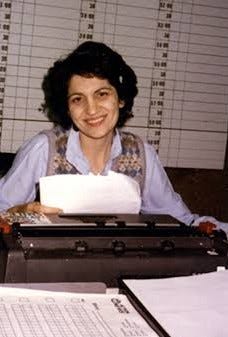
Lynda was, easily, the unofficial floor leader in the WXYZ-TV newsroom when I arrived at the end of 2000.
I was the fifth news director in five years. I’d been invited to fix things.
And I knew quickly I would need Lynda.
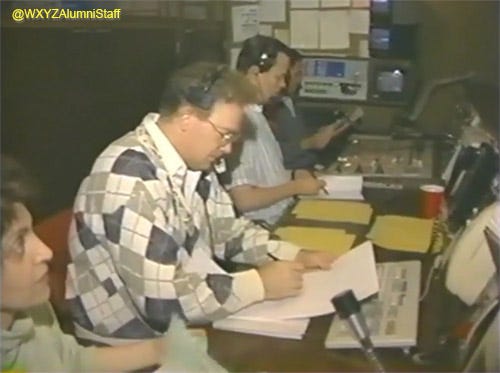
She had once been the line producer of the 6 o’clock news. She crafted the newscast, chose the stories and wrote much of what eventually appeared in the prompter.
The anchors and staff adored her.
But by the time I arrived, Lynda had been demoted to the writer’s pool.
In those first weeks, she would stop at my office doorway.
Always the doorway.
She’d ask me something, seemingly testing me.
I’d invite her in.
She wouldn’t come.
Eventually she explained that she had vowed never to enter that office again. Bad things had happened to her in there.
I had heard she was blamed for things that had nothing to do with her and had become a convenient scapegoat.
She was the type to internalize and not fight back.
Not that she couldn’t.
But she’d been intimidated, and had pulled back.
So I left it alone.
I was patient and kind, but mostly I was determined.
As the weeks went by, I began telling her in these brief doorway talks that it was part of my plan to win her over, get her to sit down with me and have her help me fix the place.
She loved the people in the newsroom, I knew it, so I kept asking her to take back the 6 o’clock news and own it.
The newsroom was rooting for her, and I promised I would never embarrass her, or allow anyone else to either. I may have thrown in some colorful descriptors for emphasis.
Eventually, Lynda walked through the doorway, and sat.
We talked a little. The next day, a little longer.
She took the newscast back.
It thrived.
It moved back into first place.
Lynda and the rest of the team made me look good.
The company gave me a promotion. Another challenge I couldn’t refuse. It meant leaving Detroit for Tampa.
It was winter, so that part wasn’t difficult.
Leaving was.
Lynda strode into my office carrying a wrapped gift.
“Open it now,” she said.
I did.
It was a desk clock.
“Read it.”
I smiled to myself. I loved the confident voice, and that the fear had left this room.
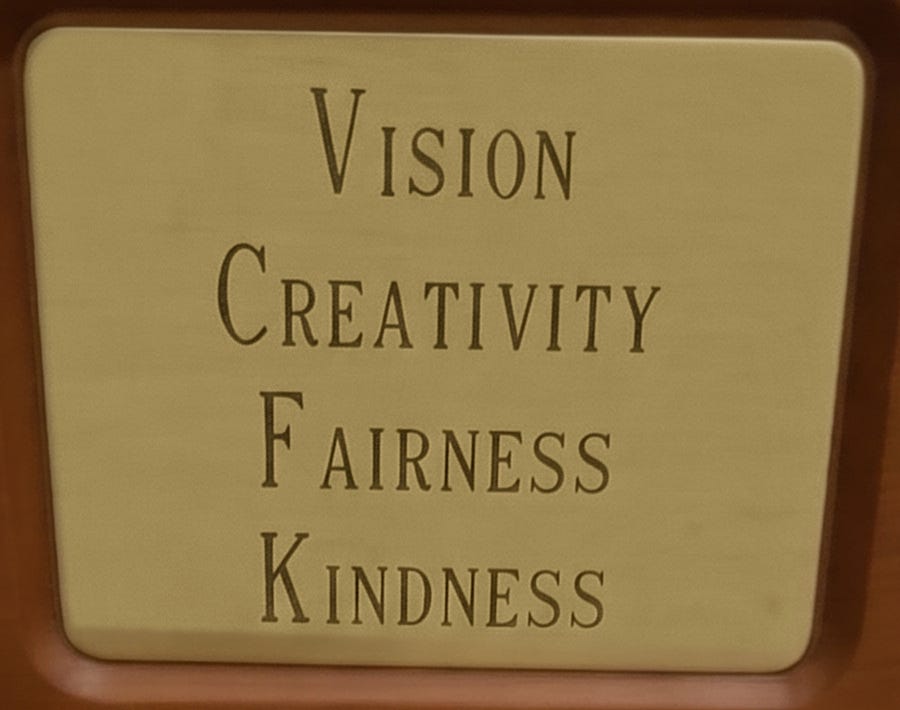
Engraved were four words:
VISION
CREATIVITY
FAIRNESS
KINDNESS
“I want you to know,” Lynda said, “I gave this a lot of thought. And when I think about you, these are the four words I think best describe you.”
So, I read them again, this time letting them soak in, the way they were meant to be savored.
And for once, I had the grace not to say anything and ruin the moment.
Then, with a pause worthy of a Broadway show, she grinned:
“…and you can use a little work on the last one.”

Eighteen months later, came word that Lynda was sick.
I called. We talked around her illness. I didn’t push. It was good to hear her voice. I told her I was looking at her clock, and it matched my desk, which it did.
A week or so later came another call. Lynda had lost her fight.
Lynda was 57.
My BlackBerry buzzed a day later.
It was Sue, Lynda’s sister.
We had never met, never spoken.
I spoke about my admiration for Lynda. I knew she had been driving an hour each way to work and that when she wasn’t at the station, she was home helping care for her mother and father.
Sue sounded remarkably like Lynda.
Warm. Serious. Direct.
She told me Lynda had spoken about me to her family, often.
That sounded so strange, especially on this call.
That she had become happier after I arrived at the station.
I was glad to hear that, but I stayed quiet, not wanting to explain about the doorway drive-bys and how much fear I had seen in her eyes or the hurt from being a scapegoat.
And then Sue said her family had a request.
Would I come to Michigan?
They wanted me to be one of Lynda’s pallbearers.
That Lynda would have wanted it, and the family would be honored.
I remember being extraordinarily grateful.
That was over 20 years ago.
I’ve had many desks since then. Tampa. Moline. New York. Chicago. Tampa again. Medford, Oregon. Tampa again.
The clock has made the trip everywhere with me and has sat on each of those desks.
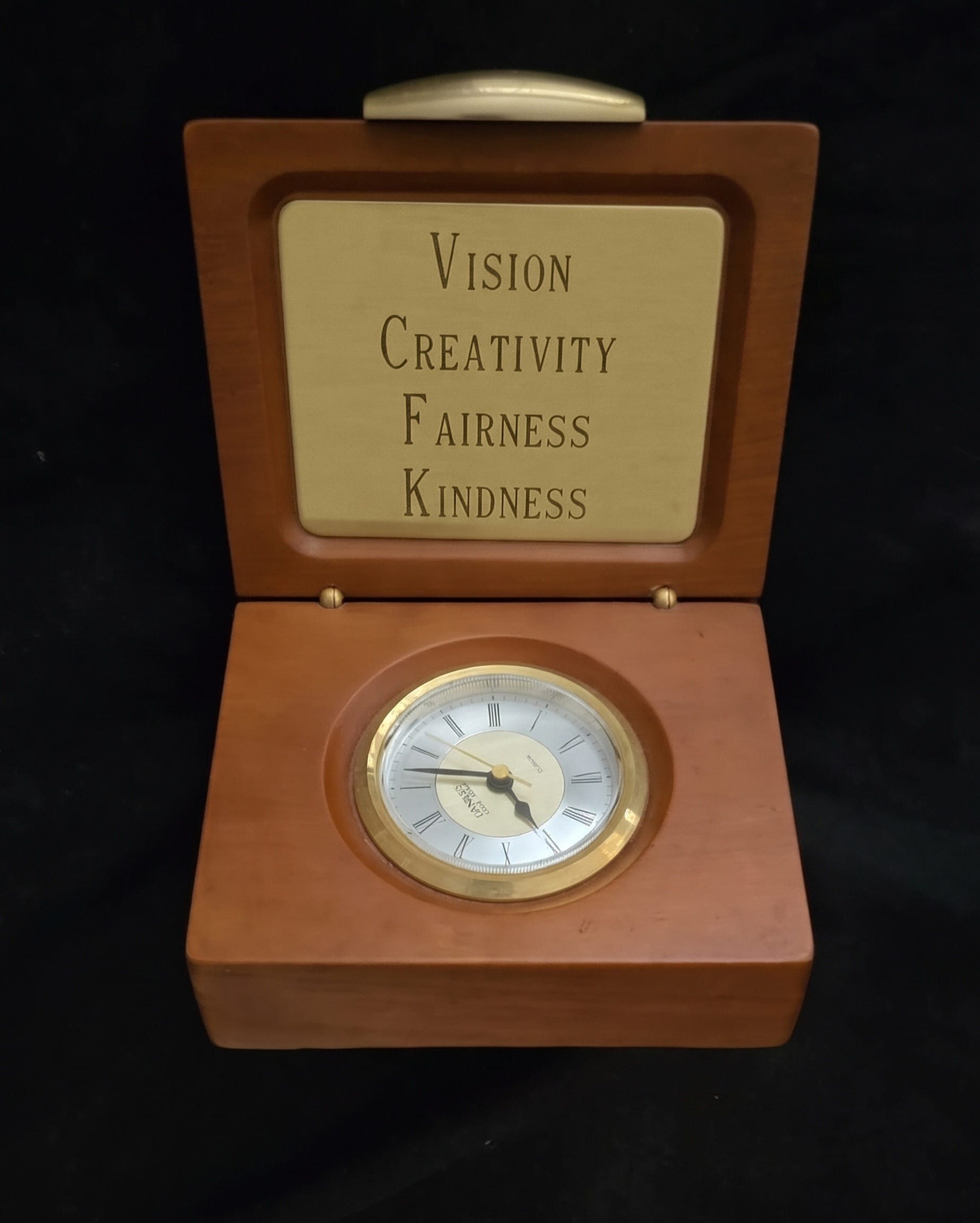
Four words. One reminder.
When I look at it, I think about the lessons time teaches.
And what a manager can accomplish when you recognize talent in someone and then guide, coax, cajole or inspire that person into recognizing it again themselves.
And always, it has to come from the person.
If you supervise people, that’s where Management and Wisdom intersect.
Disney and other companies can keep refining the performance review. They can automate it, outsource pieces of it to AI, grade the language with AI, store it with AI efficiency and retrieve it years later with remarkable precision.
But the human spirit is usually the differentiator.
Lynda’s performance review of me was four words and one piece of wisdom.
I still think she said it right.