


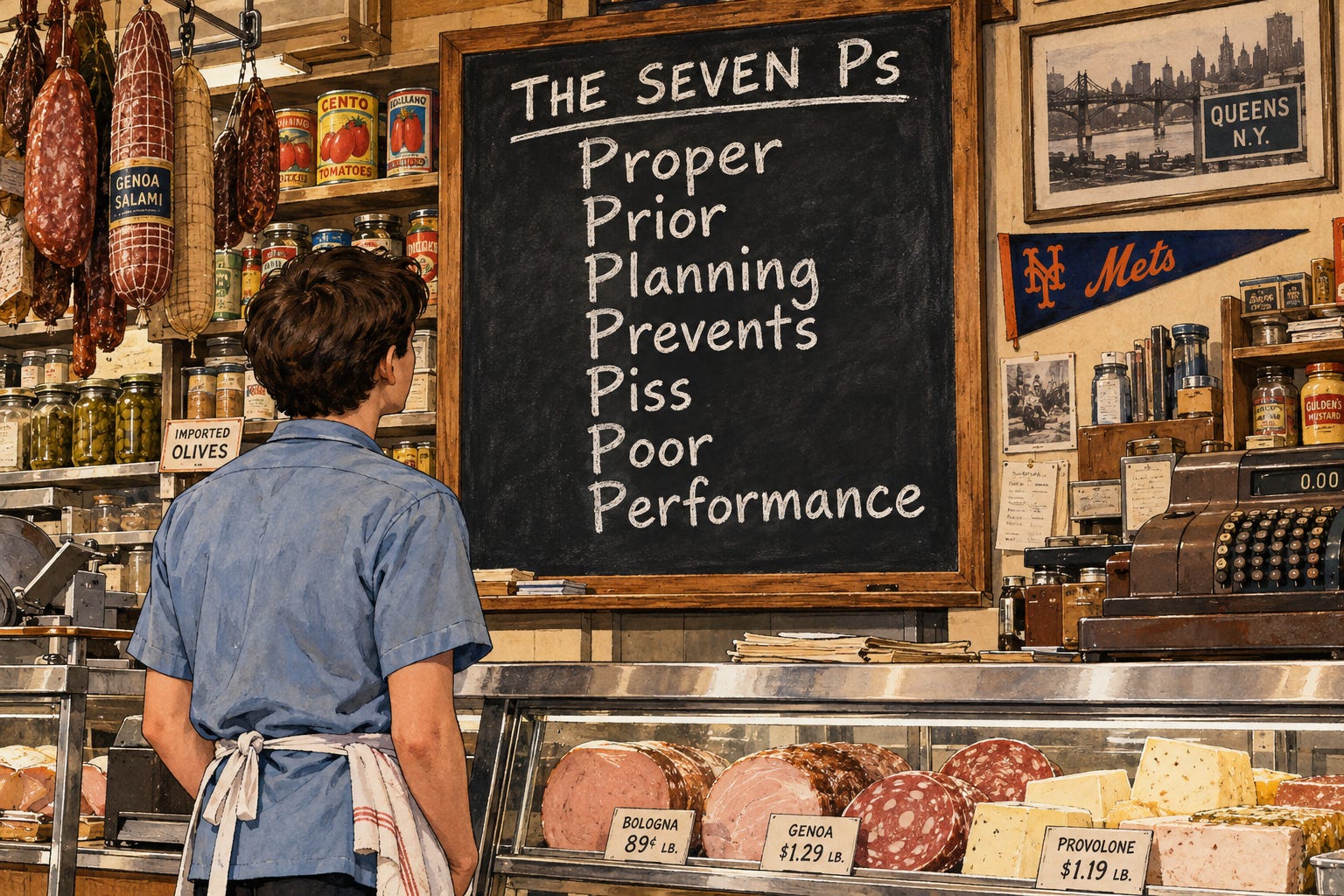
As a teenager, I worked in a deli. The owner was 8 years older than me, and taught me many things, including the Seven Ps.
Proper Prior Planning Prevents Piss Poor Performance.
Since then, I have worked for and with many bosses and a dozen CEOs. Some should have spent time working at Ken’s Deli.
This week’s business news brings us “layoff limbo.” Companies announce cuts before telling employees who, where or when. And in some cases, the “why.”
Management has decided to ruin your weekend. Which weekend? We’ll get back to you.
“Layoff” once generally meant a temporary interruption in employment. Work slowed; perhaps you’d return. By the 1980s, permanent “downsizing” was becoming a shareholder-value strategy. By the 1990s, it was standard corporate practice.
We got accustomed to it. The temperature kept rising.
The vocabulary kept getting more and more creative.
As we like to do on occasion, please enjoy this next paragraph in your best George Carlin voice:
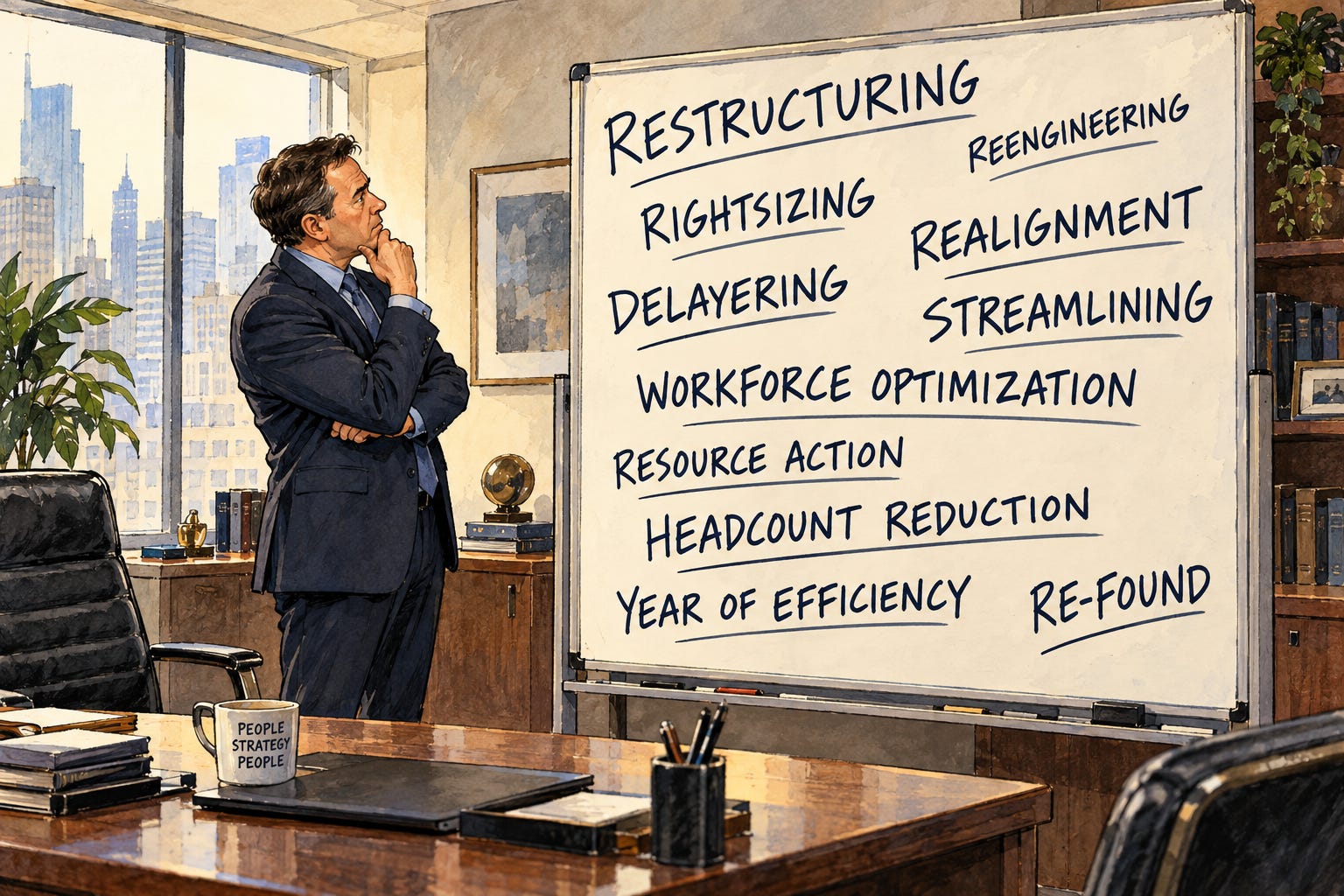
Over time, “layoffs” became fancy words: Restructuring, reorganizing, reengineering, realigning, resizing, rebalancing. That’s a lot of RE. Then somebody wants another try. Downsizing, rightsizing, which by the way, you never hear anyone admit it turned out to be a wrongsizing. Delayering, streamlining, simplifying, redeploying, reallocating. Eliminating redundancies, reducing personnel surpluses, capturing synergies, optimizing the workforce, optimizing headcount. You’re a head, I’m a head, easier to say goodbye if we don’t talk about the rest of you. Workforce reduction, personnel realignment, resource reallocation, synergy-related headcount restructuring. A reduction in force. A resource action. Then came the Year of Efficiency. As opposed to all the other years.
And in the last few years, a newer one you may have heard: Re-found. “Re-found,” as in, long ago we founded the company, now as CEO I realize I haven’t been paying attention, so cue the layoffs, but we won’t say “layoffs,” because we are telling Wall Street we are going through a “re-found” and that should keep my stock options from sliding and I can cash out in a few years.
Let’s be candid. Layoffs suck.
Personally, I’d rather fire someone. Don’t get me wrong, that’s never fun. You are changing someone’s career trajectory, and the moment stays with you both. But anytime I’ve fired someone, they knew it was coming, or at least possible. We had talked about the problem.
As readers of this column have learned, when there’s a problem, I first look at my managers and myself for fault before the rest of the team. Did we hire the wrong person? Fail to train them? Fail to make clear what we expected?
A layoff is different.
In the companies where I’ve carried this out, somebody in a nice office, removed from managing people, product or operations, picks a number. Five from this department. Five from that. Department heads are told to suggest names, based on the least impact to the business. Let’s pause here, and just say, this is a horribly unfair exercise when you are asked to run a budget and you stay under all your targets, but that isn’t good enough to save otherwise productive people. In big companies, the proposed list gets reviewed for discriminatory patterns. You know, some old, some young, some tall, some short, some bright, some not so much, yes, I’m joking. The actual review is supposed to check whether any protected group is disproportionately affected and whether the selections are justified, not assemble a demographic assortment. But after all that care, good people who have done nothing wrong still end up on the list.
Then you sit across from a fifteen-year employee who has done nothing wrong. And candidly, is productive in the work you preside over.
They look at you as if you’ve betrayed them, and in some ways, you have.

Sure you can stare down your bosses, you can always quit. Somebody else will fill your chair, likely at a lower salary, and conduct the layoffs. Either way, the rest of the team you spent years building watches things coming apart, and nobody is offering a good reason.
What is your promise worth the next morning?
Milton Friedman argued that business should increase profits within the rules of the game. He didn’t prescribe an annual sacrifice of employees.
Jack Welch made removing the bottom ten percent a management doctrine. Fine, perhaps, the first year. Maybe the second. But if ten percent of your people are inadequate EVERY year, when do we review your hiring and training instead of last year’s middle? In 2013, Welch defended his system in an interview, but did reject “rank and yank,” arguing employees should receive clear expectations, coaching and time to improve. But not everyone knew Jack.
Herb Kelleher offered a better lesson: “Not furloughing is really a great discipline with respect to hiring.”
Pope John Paul II supplied the human measure: “work is ‘for man’ and not man ‘for work’.”
The person across the desk isn’t a surplus resource.
Of course businesses face shocks. Markets disappear. Nobody can guarantee every job forever. And some layoffs are part of winding down a business when you can’t yet say the company is closing. I’ve been on that end a few times too. Those are not fun, but in hindsight, I’ve fully bought in, because it was prudent, and even considerate.
CEOs are responsible for anticipating trouble and for the expectations they cultivate on Wall Street. It’s just mad management when employees pay for missing them.
So before praising a CEO for decisive cuts, I like to know what decisions made those cuts necessary.
Leaders lead. They know the spending, the revenue, the customers and the people doing the work. They stay nimble. Flexible. Aware. Close enough to hear trouble before it becomes a consultant’s presentation.
Management and Wisdom are two different words for a reason.
Management can execute the reduction. Wisdom asks how we got here—and what we should have done earlier.
Proper Prior Planning Prevents Piss Poor Performance.